
Methods from mechanical, electrical, chemical, and materials engineering, as well as computer science, drive innovation across scales—from the molecular level to entire ecosystems—and support solutions to challenges in health, manufacturing, and environmental sustainability.
Intragenomic Processor.
Epistasis, heterosis and pleiotropy study by DNA real time sequencing using spectroscopy transition method. Read more…
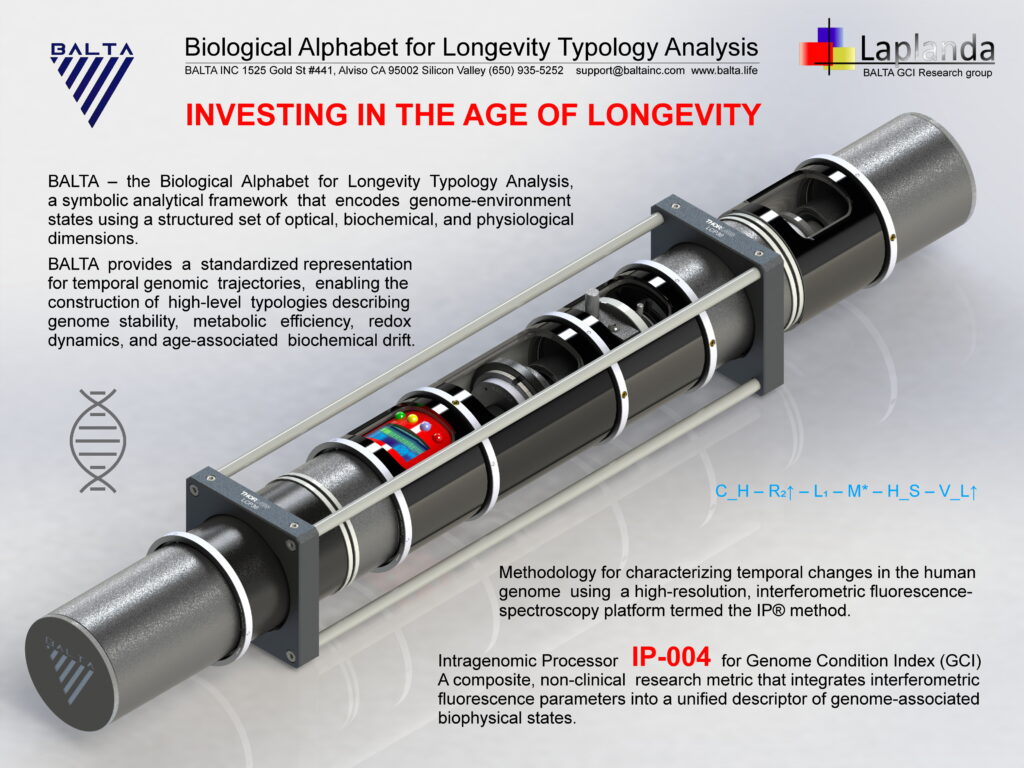
IP®-based method when applied at the scale of the human genome
High-resolution optical signatures of chromatin state.
This method (455 nm excitation + interferometric FT fluorescence detection) can resolve biochemical and structural states of chromatin, such as:
- Redox-state–dependent changes in NADH/FAD ratios
- Autofluorescence shifts caused by DNA damage (e.g., oxidation, crosslinks)
- Chromatin compaction / histone modifications that alter scattering and local environment
- Protein–DNA binding changes that shift fluorophore lifetimes
- Age-dependent accumulation of lipofuscin or porphyrin-related signatures
These are legitimate and measurable using advanced fluorescence methods. Read more…
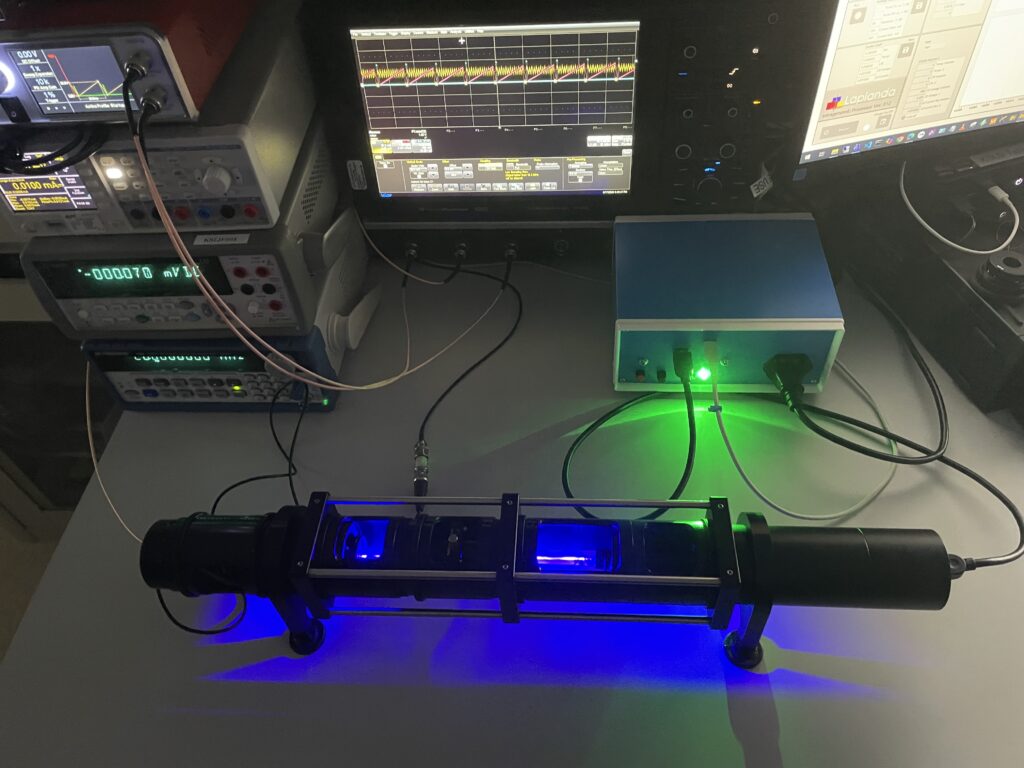
IP®-Res012
High-resolution optical signatures of chromatin state.
Blue laser irradiation significantly enhances the synthesis of functional metabolites (flavonoids, polysaccharides, and alkaloids) in some plants by regulating key pathways like CRY DASH, SPA1, HY5, and PIF4, compared to conventional light sources. Physiological and RNA-seq analysis indicates that blue laser treatment boosts protective enzyme activity (POD, SOD, PAL) and affects gene expression for improved secondary metabolite production.
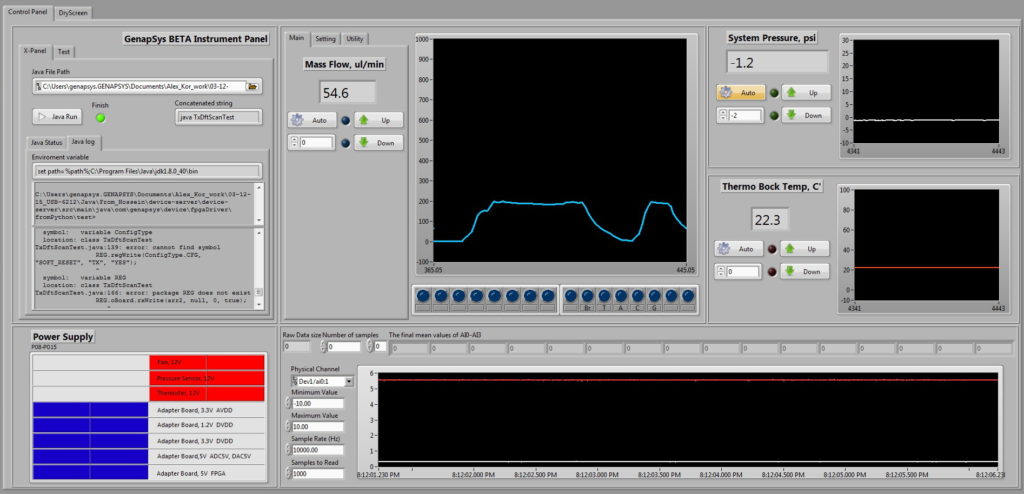
DNA Sequencer Instrument Test Bench
The Test Bench was designed to check the concept of BETA DNA Sequencer, components, software and impedance spectroscopy method as itself implemented to BETA instrument design. The result had admitted the insolvency of the method and the whole project. Read more…

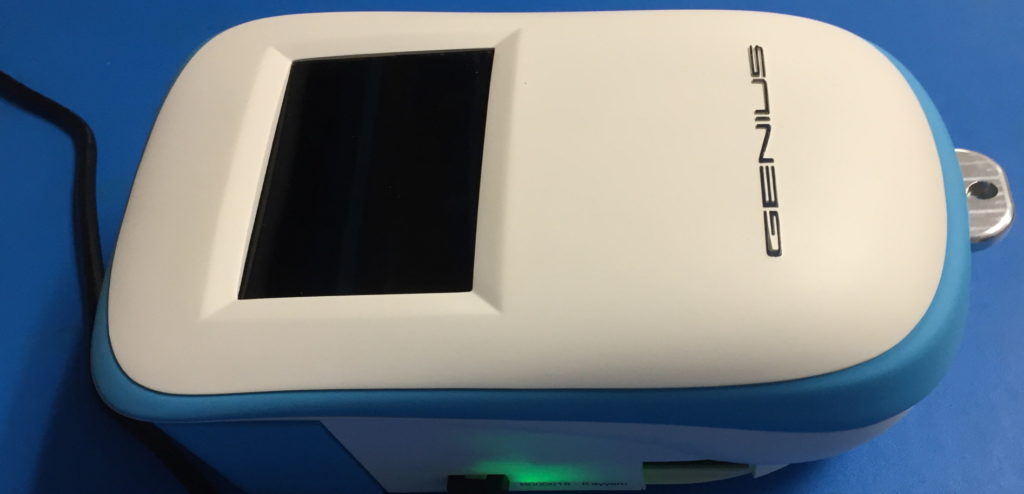
Remote controlled Candela 7055 Photonic Sequencer.
Ultra Fast Photon Spectroscopy of the DNA fragment method is developed as a sequencing the data flow of RNA polymerase molecule per cell collected using fragmentation of spectrum wavelengths of reflection of the sugar AGTC in timeline and assigning the classification to it as a particles specified in filtered data array. The mobile device can be adopted for running of most of the functions. Read more…
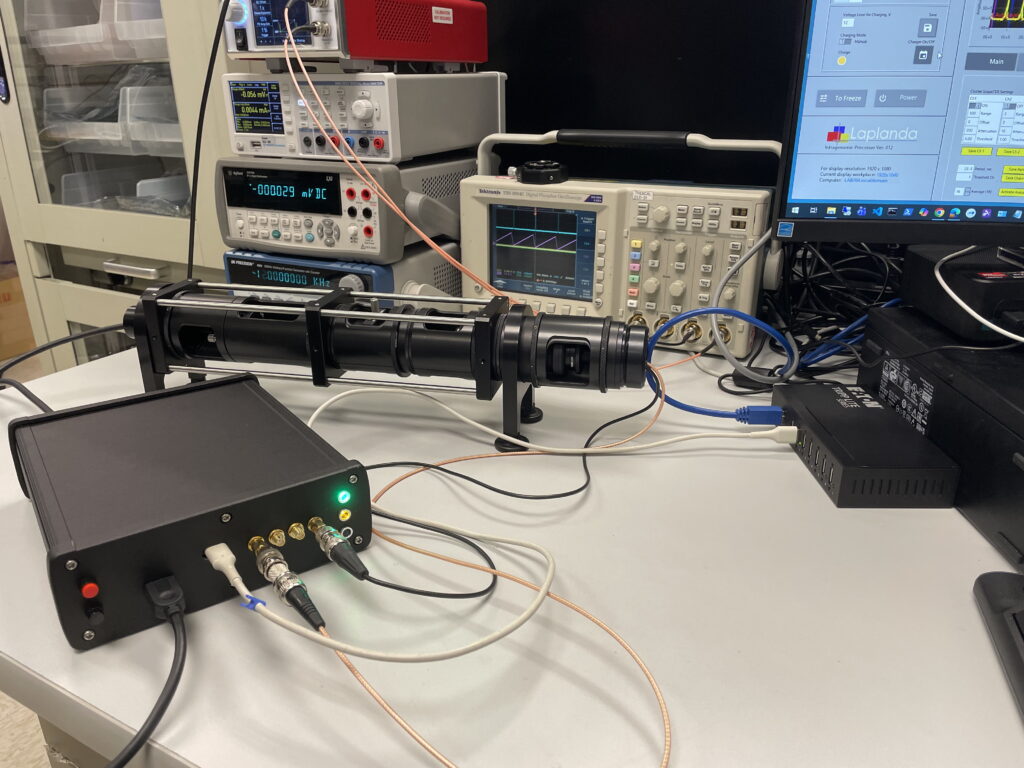
Laplanda 5A Ultra-Low Noise Laser Diode Power Supply
Industrial-grade, ultra-low noise power supply unit (PSU) explicitly optimized for driving highly sensitive laser diodes. The system leverages a lithium-ion battery bank for total isolation from mains electrical noise. It features an integrated automated recharging system for continuous operation and an 8-bit digital control interface providing 256 discrete levels of current switching up to 5 Amps.
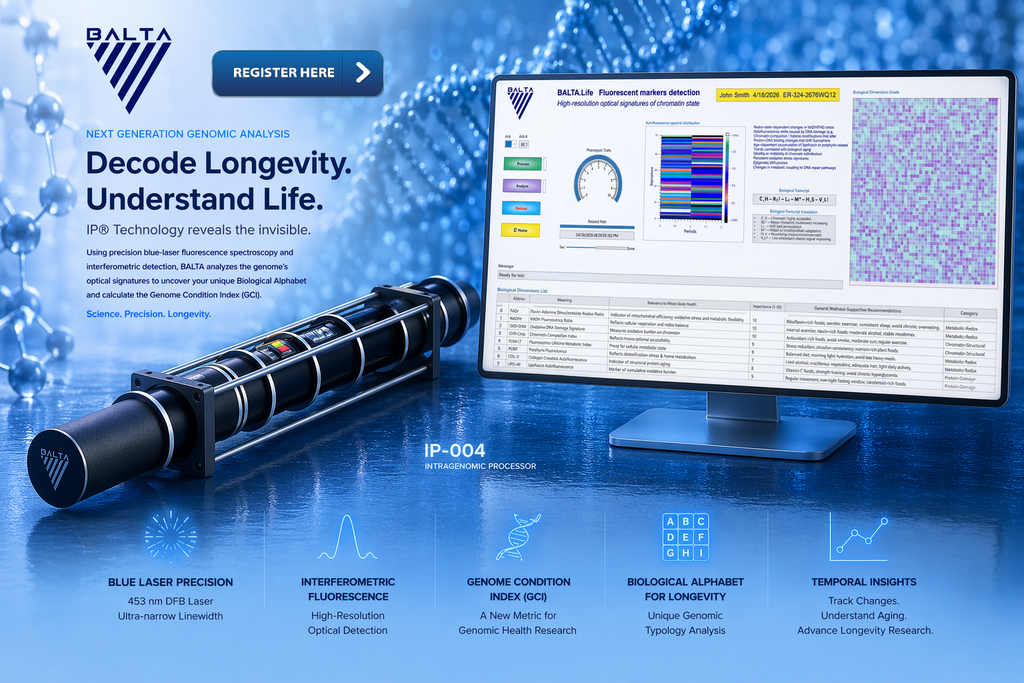
BALTA – Biological Alphabet for Longevity Typology Analysis
The Genome Condition Index (GCI)
We present an experimental methodology for characterizing temporal changes in the human genome using a high-resolution, interferometric fluorescence-spectroscopy platform termed the IP® method. The approach integrates a narrow-linewidth 455 nm distributed-feedback (DFB) laser, coherent excitation control, and Fourier-transform interferometric detection to quantify subtle biochemical and structural states within chromatin and the surrounding molecular environment. Periodic fluorescence-based genomic profiling reveals optical signatures related to redox balance, chromatin compaction, oxidative DNA damage, metabolic cofactor dynamics, hydration microenvironment, and xenobiotic influences. These signals form a multidimensional “optical phenotype” of genome condition that evolves over time.